Schedule Your FREE QUOTE

Drafty Windows in Kansas: Should You Seal, Repair, or Replace Them Before Winter?
Cold air near a window does not automatically mean you need a new one. Here is how to identify the problem and decide whether sealing, repair, or replacement makes sense before Kansas winter arrives.
The heat is running, but the room still feels chilly. You move closer to the window and notice a cold spot near the sill. Before reaching for caulk or shopping for replacement windows, it helps to understand what is causing the discomfort.
The right solution depends on the source of the draft and the window’s overall condition. Worn weatherstripping calls for a different approach than deteriorated framing or recurring water intrusion. For homeowners dealing with drafty windows in Kansas, a fall inspection can help separate manageable maintenance from problems that deserve professional attention.
First, Find Out Where the Draft Starts
A cold window does not always mean outside air is leaking through it. Cold glass can cool nearby indoor air, creating a downward flow that feels like a draft. Actual air leakage can occur around the movable sash, worn weatherstripping, or gaps between the window frame and surrounding wall. These problems require different solutions.
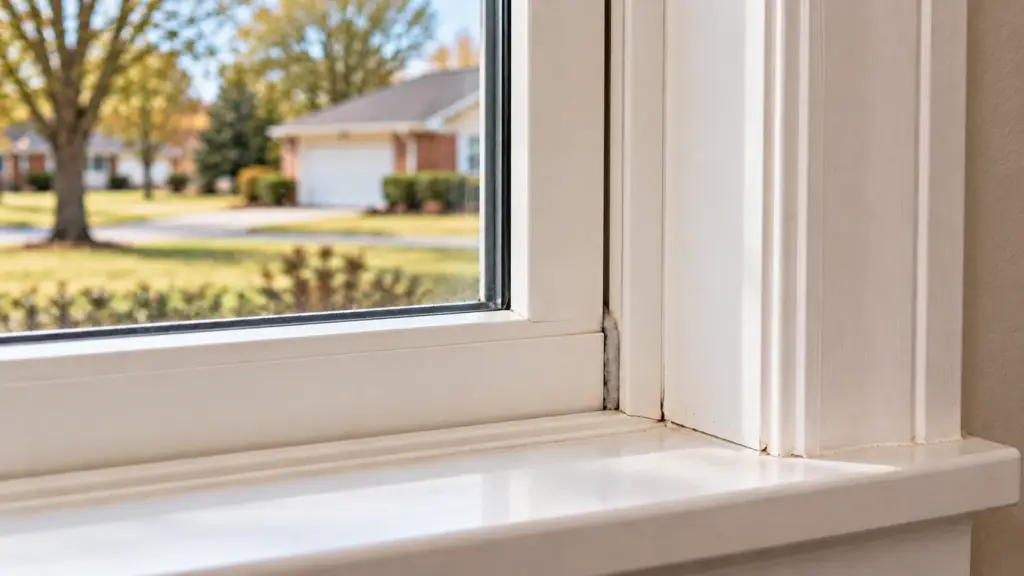
Close and lock the window normally, then check whether the sash sits properly in the frame. Look for visible gaps, damaged weatherstripping, loose hardware, and deteriorated trim. On a breezy day, move your hand around the edges of the closed window. A lightweight tissue may help reveal localized air movement. Note where you notice it and whether the problem affects one window or several.
This check provides useful clues, but it cannot establish every cause of a cold room.
When Sealing a Drafty Window Makes Sense
Sealing is worth considering when the window is otherwise sound, operates properly, and has a localized air leak. Weatherstripping seals movable joints while allowing the window to open and close. Appropriate caulk or sealant can address stationary joints where sealing is permitted. The correct material and placement depend on the window and installation.
Follow the manufacturer’s instructions for preparation, application temperatures, and product selection. Never block drainage openings or joints designed to release moisture. Covering every visible opening can interfere with water management. If the window closes securely and the surrounding materials are intact, replacing worn weatherstripping or addressing an appropriate gap may be a reasonable first step.
However, sealing cannot restore rotten wood, straighten a distorted frame, or repair a failed seal inside an insulated glass unit. Those conditions need a different evaluation.
When a Targeted Repair May Be Enough
Repair may make sense when a specific component has a problem but the rest of the window remains serviceable. Depending on the design and availability of compatible parts, damaged hardware, worn weatherstripping, or certain sash problems may be corrected without replacing the entire window.
Pay attention to operation. Sticking, rattling, uneven closing, or a latch that will not engage can help identify what needs attention. Avoid forcing a window that binds or appears damaged. Fogging also deserves a closer look. Condensation on the room-facing glass can occur when humid indoor air meets a cold surface; it does not automatically mean the window has failed. Persistent moisture between panes of insulated glass can indicate a failed glass-unit seal.
Ask whether the glass unit or sash can be replaced separately and whether the frame remains sound. Water stains, soft wood, or recurring leaks also require investigation of the moisture source.
When Replacement Is Worth Considering
Replacement deserves consideration when deterioration is extensive, multiple components are failing, or repair cannot reasonably restore reliable performance. Substantial frame damage, recurring water intrusion, and persistent operating problems are reasons to seek an evaluation. Older single-pane windows may also warrant consideration when comfort remains poor after appropriate maintenance and air sealing.
These signs do not automatically require whole-window replacement. Cracked glass, damaged hardware, and some air leaks may be repairable. Age alone should not decide the outcome. When comparing replacement windows in Wichita or Derby, ask about climate suitability, energy-performance ratings, installation, and how existing damage will be addressed.
A lower U-factor generally indicates better resistance to heat flow. Proper air sealing and flashing around the opening are also important. New windows should not come with an assumed heating-bill reduction; results depend on the home, installation, and household energy use.
Save This Pre-Winter Window Checklist
Walk through your home and check each window:
● Feel: Notice localized air movement around closed window edges.
● Look: Inspect weatherstripping, trim, and frames for deterioration.
● Operate: Check that the window opens, closes, and locks properly.
● Inspect the glass: Look for cracks or persistent moisture between panes.
● Check for water: Note staining, soft materials, or recurring dampness.
Photograph visible damage and record when problems occur. If a room stays cold after window issues are addressed, other parts of the home may also need evaluation.
Choose the Solution That Fits Your Home
A sound window with a localized leak may benefit from sealing. A damaged component may be repairable. Extensive deterioration or unresolved problems may justify replacement.
Mid-Continent Exteriors provides replacement windows and exterior home improvement services in Derby, Wichita, and surrounding areas. To discuss replacement options, call 316-838-4044 or request a free estimate at mcexteriorsks.com.
Save this checklist for your fall inspection, or share it with a Kansas homeowner deciding what to do about drafty windows.